Transforming Proven Designs into Cutting-Edge Unmanned Solutions
Medium to Large USV: Engineering, New Build, and Conversion
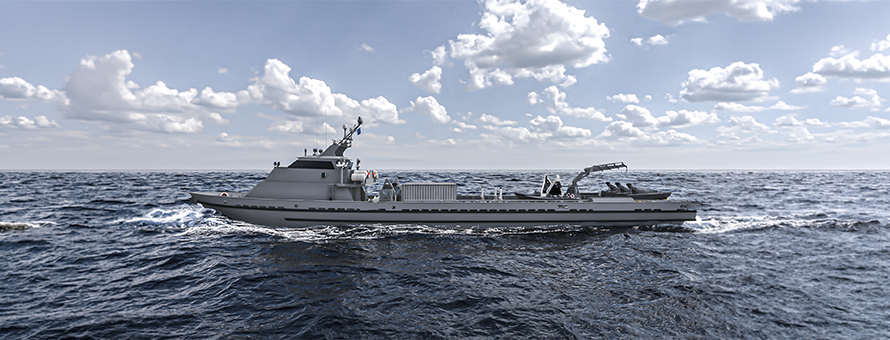
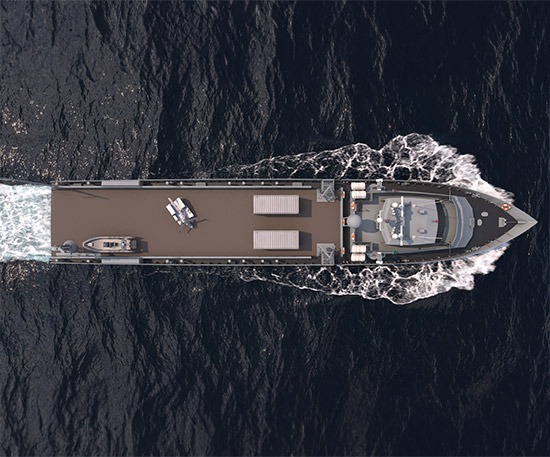
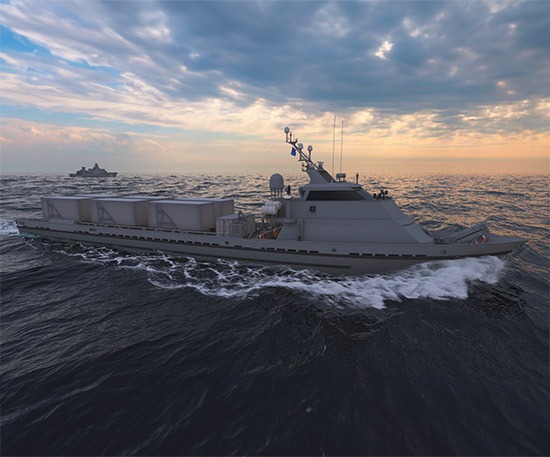
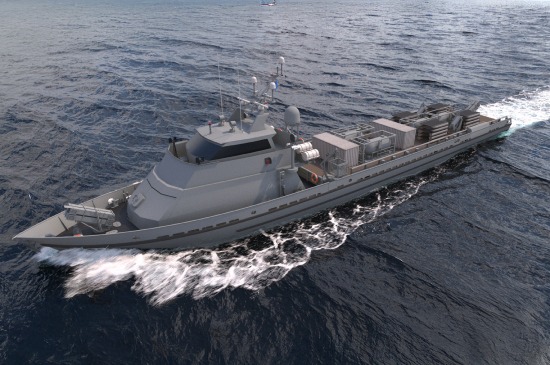
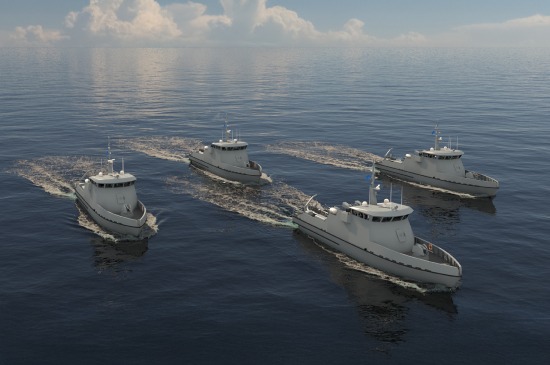
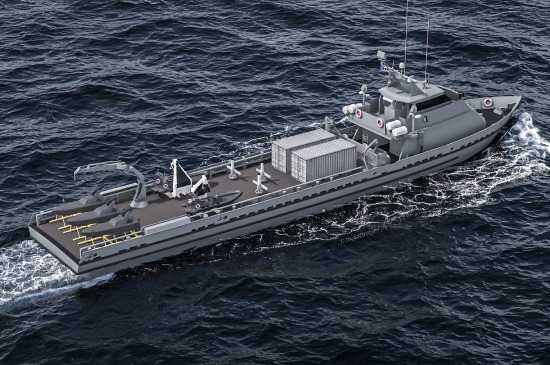
Swiftships is a leading company in the construction and conversion of Medium to Large Unmanned Surface Vessels (USVs). Since 2018, when our Fast Supply Vessel (FSV), Riley Claire, was selected for conversion into the militarized Large Unmanned Surface Vessel (LUSV) known as NOMAD, we have been at the forefront of supporting the U.S. Navy’s vision. Our efforts include the construction of Medium Unmanned Surface Vessels (MUSVs), contributing to the Navy’s goal of expanding its fleet by approximately 134 unmanned surface and underwater vehicles by 2054. We offer a “platform-as-a-service” model, featuring over 100 proven designs that provide clients with seamless, plug-and-play solutions.
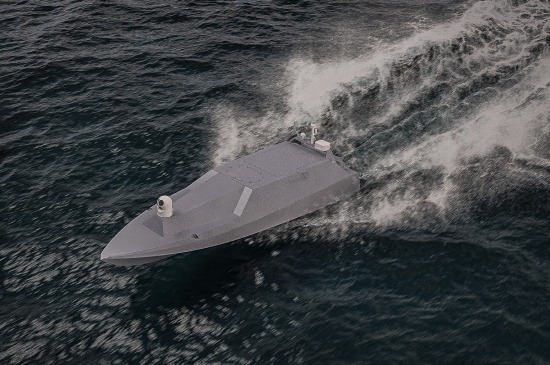
Medium and Large USVs significantly expand naval operational capabilities, supporting distributed lethality and enhancing fleet resilience. LUSVs are built for long-endurance missions, offering roles in surveillance, reconnaissance, and mine countermeasures while providing additional missile launch platforms for strike and defense missions. Their ability to operate autonomously and as refueling stations for smaller assets extends the reach and endurance of fleet operations, allowing sustained deployment in contested areas. MUSVs equipped for ISR, and electronic warfare, serve as “eyes and ears” for the fleet, gathering data, disrupting enemy communications, and supporting situational awareness without exposing manned vessels to risk.
Proven and Cost-Effective Conversion Methodology
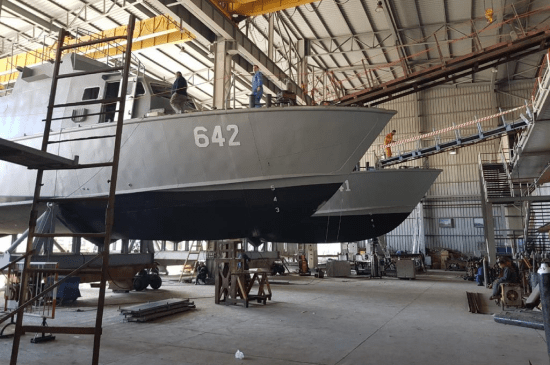
Swiftships’ commercial-to-military craft conversion methodology offers a strategic advantage in today’s challenging market, meeting the rising demand from the U.S. Navy for medium to large USVs amid increasing geopolitical tensions. Our approach leverages adaptable, proven and available designs with advanced engineering capabilities to effectively transition commercial platforms into mission-ready autonomous vessels. This conversion methodology is structured in four key phases:
Phase I: Assessment and Feasibility
Phase I:
Assessment and Feasibility
A comprehensive evaluation of the vessel’s structural integrity, propulsion, and current systems to determine conversion feasibility. This step includes analyzing the platform’s suitability for autonomous operations and identifying any necessary modifications to ensure compatibility with military and mission-specific requirements.
Phase II: System Upgrades
Phase II:
System Upgrades
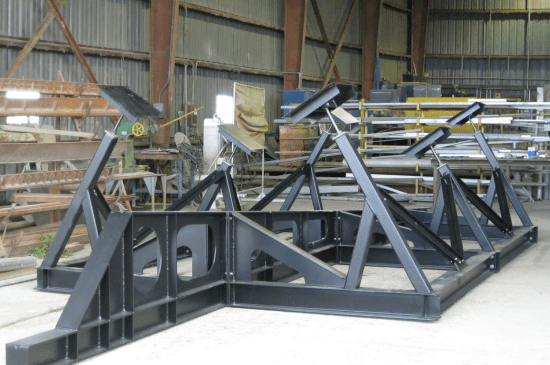
Enhancing the hull, mechanical, maritime, and electrical systems for improved durability and operational reliability in high-stakes environments. This phase ensures the vessel is equipped to handle extended autonomous missions and withstand various operational conditions.
Phase III: Autonomy System Integration
Phase III:
Autonomy System Integration
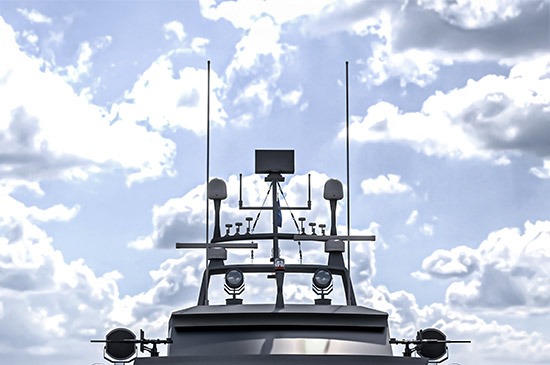
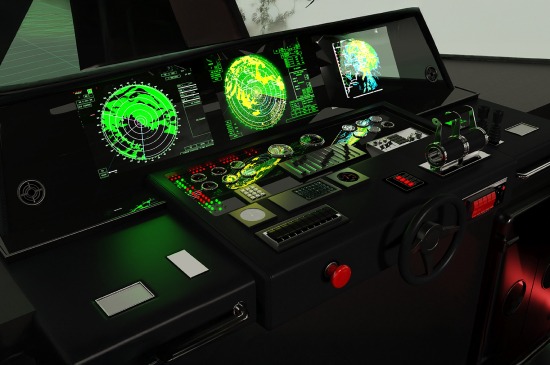
Installing and integrating autonomy systems with advanced sensors and communication equipment. This phase equips the hull with C-Band and Ka-Band radars, IR and EO cameras, LOS and BLOS communications, and additional mission-specific sensors to enable precise navigation, target tracking, and situational awareness.
Phase IV: Testing and Validation
Phase IV:
Testing and Validation
Rigorous system reliability testing, including long-range autonomous transits through complex environments, to validate integrity, performance and to ensure the vessel meets operational standards. This phase includes sea trials to assess navigation, obstacle avoidance, and systems resilience under realistic mission conditions.
Medium-Large USVs as Navy Strategy Enablers
The Navy’s Medium Unmanned Surface Vehicle (MUSV) and Large Unmanned Surface Vehicle (LUSV) programs are essential for enhancing fleet adaptability and resilience in high-threat regions like EUCOM and INDOPACOM. By integrating advanced technologies such as AI, hypersonic and air defense missiles, and directed-energy weapons, these USVs can support the Navy’s Distributed Maritime Operations (DMO) strategy, enabling rapid response, multi-mission capabilities, and increased personnel safety in contested environments.
Design and Operational Efficiency
Design and Operational Efficiency
MUSVs and LUSVs simplify and optimize vessel design by removing crew-based requirements, resulting in improved efficiency, greater maneuverability, and easier cargo handling with increased capacity. Autonomy reduces the need for human intervention, which minimizes human error (responsible for 95% of accidents) and related costs.
Mission Versatility and Payload Capacity
Mission Versatility and Payload Capacity
Both MUSVs and LUSVs are modular and can support diverse mission-specific payloads, enabling them to perform high-risk tasks autonomously and handle various mission requirements such as mine countermeasures, anti-submarine warfare, anti-surface warfare, land strike, augment air defense, drug interdiction, environmental protection, disaster response, and other maritime missions.
Distributed Fleet Support and Autonomous Connectivity
Distributed Fleet Support and Autonomous Connectivity
Designed to work alongside “mother ships,” MUSVs and LUSVs extend the operational reach of larger vessels by relaying data and supporting hull-to-hull operations. This distributed approach enables manned vessels to keep a safe distance while using unmanned assets for high-risk tasks, enhancing fleet flexibility. The LUSV can carry additional strike and air defense missiles to increase the magazine depths of the Aegis destroyers. Additionally, LUSVs support refueling for other USVs and patrol vessels, acting as mobile refueling stations in contested areas to boost endurance, time on task, readiness, and strategic posture.
Tactical Advantage and Defense Strategy
Tactical Advantage and Defense Strategy
MUSVs and LUSVs align with the Navy’s Distributed Maritime Operations (DMO) strategy, acting as autonomous force multipliers for Surface action groups, Carrier and Expeditionary Strike Groups.